
How Temporary Emails Reduce Data Breaches
Data breaches are no longer rare incidents affecting only large corporations. Today, businesses of all sizes experience breaches, exposing millions of email addresses, passwords, and personal details every year. While users can’t control how companies secure their databases, they can control what information they share. One of the simplest and most effective ways to reduce risk is by using temporary email services.
Temporary emails don’t stop breaches from happening—but they significantly reduce how much damage a breach can cause to you personally. Let’s explore how they work and why they’re a powerful tool in protecting your digital identity.
Why Email Addresses Are Prime Targets in Data Breaches
Email addresses are often the first piece of data exposed in a breach. They are valuable because they can be used to:
Launch phishing campaigns
Attempt password resets
Link multiple online accounts
Build detailed user profiles
Once your personal email appears in a leaked database, it may circulate indefinitely on the dark web or spam lists. This is where long-term risk begins.
Temporary Emails Minimize Data Exposure
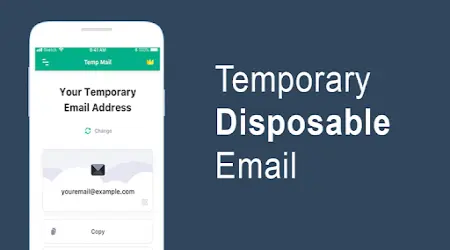
Temporary emails reduce risk at the data collection stage. Instead of sharing your permanent email address, you provide a short-lived address that has no lasting value once it expires.
Key benefit: Even if a website is breached later, the leaked email address is already inactive.
This practice follows the privacy principle of data minimization—sharing only what’s necessary, and nothing more.
Reducing the Long-Term Impact of Breaches
When your personal email is breached, consequences may include years of spam, phishing attempts, and account takeover risks.
Temporary emails prevent this by:
Breaking the link between your identity and the breached service
Preventing attackers from contacting you long-term
Making leaked data obsolete
A breached temporary email has a very short lifespan—often minutes or hours—making it useless to attackers.
Preventing Credential-Stuffing Attacks
Hackers often use breached email addresses to try the same credentials across multiple websites. This technique, known as credential stuffing, relies on email reuse.
Using temporary emails disrupts this attack method because:
The email isn’t used elsewhere
It isn’t tied to important accounts
It can’t be reused across platforms
This significantly reduces the chain reaction effect of a single breach.
Lowering Phishing and Social Engineering Risk
Many phishing campaigns rely on breached email lists. Attackers craft messages that appear legitimate because they know which services you use.
Temporary emails help by:
Isolating risk to disposable inboxes
Preventing attackers from targeting your main inbox
Blocking phishing emails once the temporary inbox expires
Fewer attack surfaces mean fewer successful attacks.
Protecting Your Primary Email as a “Secure Core”
Privacy experts often recommend treating your primary email like a secure vault—used only for critical services such as:
Banking
Government platforms
Work or school accounts
Temporary emails act as a protective buffer around this core inbox, ensuring it never appears in low-security or high-risk databases.
Where Temporary Emails Are Most Effective
Temporary emails are especially effective in reducing breach exposure when used for:
Free trials
Newsletters and promotions
Unfamiliar websites
Online forums
App testing and development
These are the most common sources of leaked email data—and the easiest to protect against.
What Temporary Emails Cannot Do
While powerful, temporary emails are not a complete security solution. They cannot:
Protect passwords reused across accounts
Secure poorly designed websites
Replace strong authentication practices
They should be used alongside other security measures like strong passwords and two-factor authentication.
Best Practices for Breach Reduction
To maximize protection:
Use temporary emails for low-risk, short-term signups
Reserve your personal email for critical services only
Use unique passwords for every account
Enable two-factor authentication where possible
Avoid entering sensitive data into disposable inbox workflows
Layered security is always more effective than relying on a single tool.
Common Misconceptions
“Temporary emails prevent all breaches” – They reduce impact, not incidents.
“Breaches only affect big companies” – Small platforms are frequent targets.
“Spam filters are enough” – Prevention beats cleanup.
Conclusion
Temporary emails don’t stop hackers from attacking—but they dramatically reduce how much damage those attacks can do. By limiting exposure, breaking tracking chains, and preventing long-term reuse of your email identity, temporary emails turn data breaches into minor inconveniences instead of lasting threats.
In an era where breaches are inevitable, smart users focus on damage control. Temporary emails are one of the simplest, most effective ways to protect your digital identity before a breach ever happens.